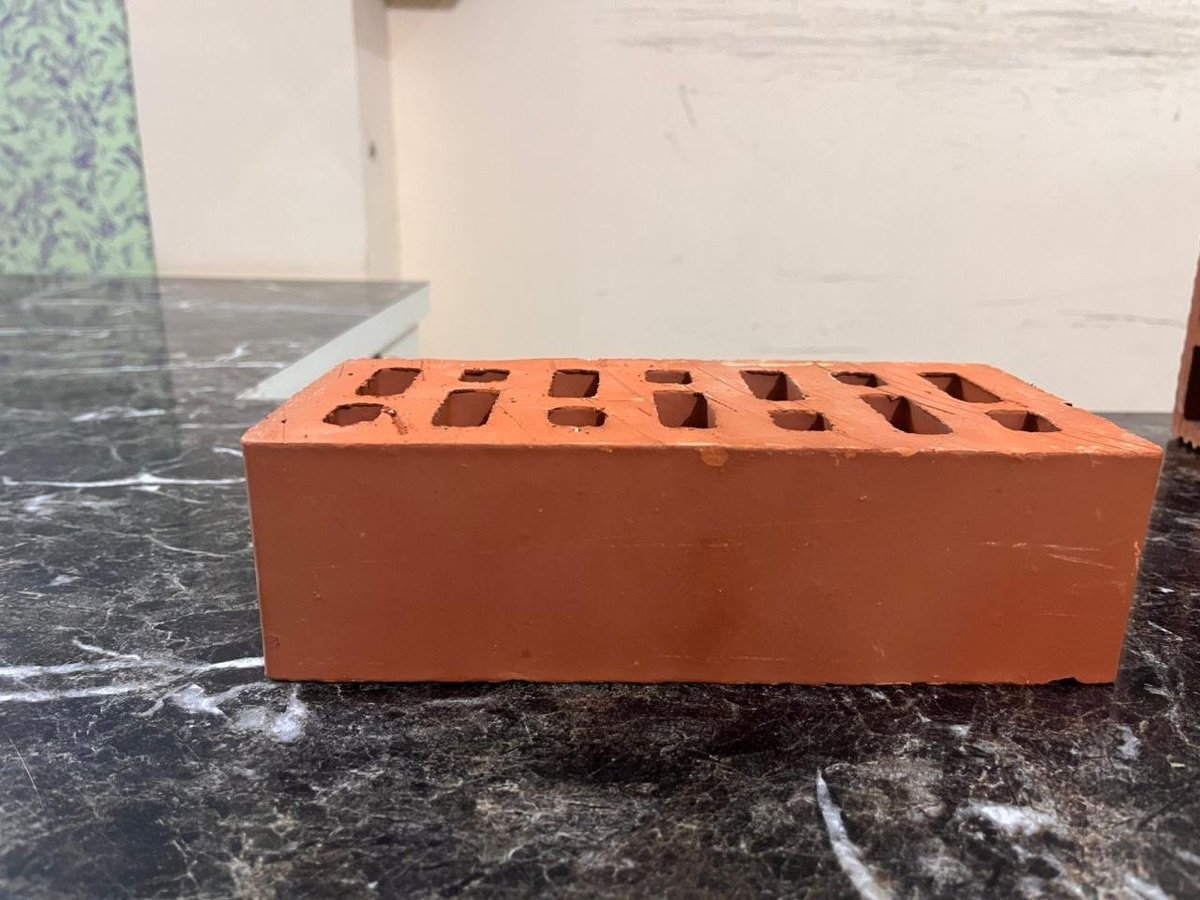
A 10 hole brick is a machine-made burnt clay brick with ten holes running through it from top to bottom. With more holes and thinner webs than 3 hole or 8 hole bricks, it is the lightest of the three and lets the least heat through. Perforated clay bricks are covered by IS 2222.
When 10 hole bricks make sense
- Infill walls in RCC-frame buildings. The frame carries the load, and lighter walls mean less dead load on beams and slabs.
- Upper floors and extensions, where every kilogram on the existing structure matters.
- Sun-facing outer walls, where the extra air pockets reduce heat gain a little.
When to choose something else
- Load-bearing walls: only if the strength class meets your engineer's design. Many builders prefer solid or 3 hole bricks here.
- Walls with many pipes and conduits, such as kitchens and bathrooms. Thin webs crack when chased by hand.
- Walls carrying heavy fixtures, unless you plan for long plugs or chemical anchors.
How 10 hole compares in our own range
Naresh Sihag, who writes this site, runs BricksStreet, a clay brick maker with its own kiln in Rajasthan. All three perforated bricks we make are 230 × 114 × 76 mm. Here is how they compare:
| 3 hole | 8 hole | 10 hole | |
|---|---|---|---|
| Hole diameter | 33–38 mm | 25–30 mm | 20–24 mm |
| Weight vs solid brick | About 10% lighter | About 20% lighter | About 25% lighter |
| Minimum compressive strength | 105 kg/cm² | 75 kg/cm² | 70 kg/cm² |
| Our recommended use | Load-bearing and exposed walls | Partition and infill walls | Partition walls up to G+2 |
Ask any supplier for the same figures in writing. Our range is at bricksstreet.in.
10 hole vs AAC blocks
If your main goal is light weight and insulation, compare with AAC blocks. AAC is lighter still and lays faster because the blocks are large, but it needs a skilled mason, its own jointing mortar and good curing. 10 hole bricks are laid like ordinary bricks with normal cement mortar, so any mason can use them.
Laying tips
- Lay with holes vertical so mortar keys into them.
- Keep mortar joints full but not excessive. Expect to use a little more mortar than with solid bricks.
- Cut chases with a grooving machine, never a hammer and chisel.
- Cure the brickwork for at least 7 days.
How many 10 hole bricks you need
The count depends on the outer size. For 230×115×75 mm bricks with 10 mm joints it is about 4.6 per sq ft for a 4.5 inch wall and 9.1 per sq ft for a 9 inch wall. Add 5% for breakage, or use the brick calculator.
Checks before buying
- Ask for the strength class (IS 1077 classes such as 3.5, 5, 7.5) and a recent test certificate.
- Check water absorption: under 20% after 24 hours of soaking.
- Look for cracked webs inside the holes. A load with many cracked bricks will have high breakage on site.
- Compare delivered prices, not plant prices, from at least two suppliers.