
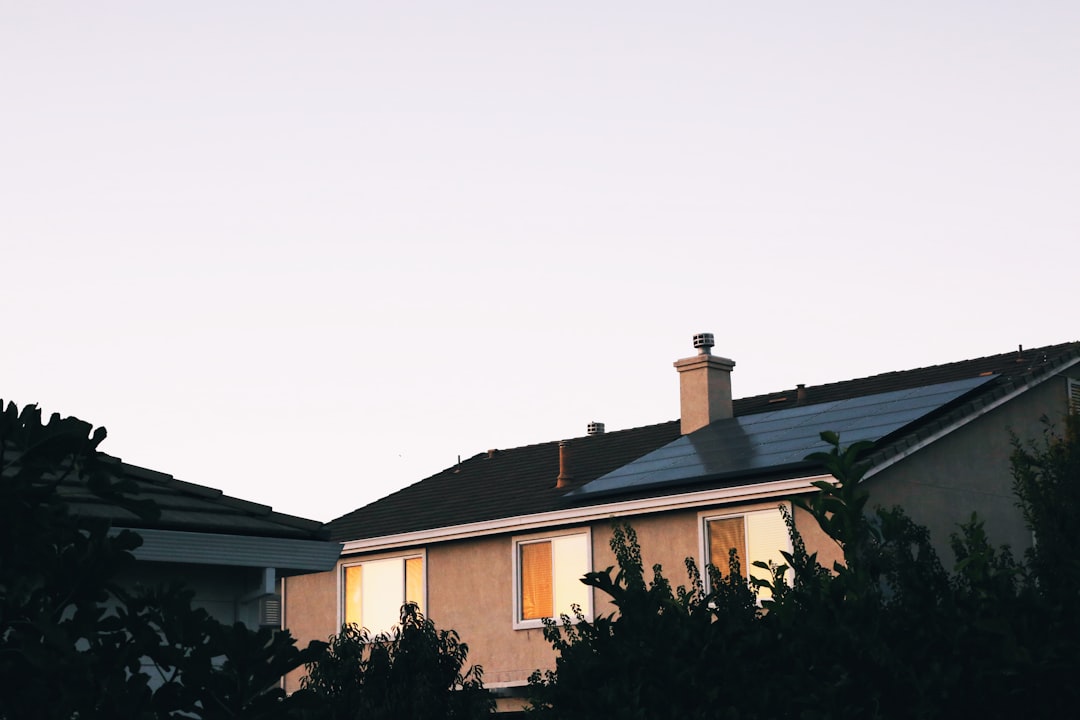
Solar panels on roofs have crossed a critical threshold in the past few years — in most countries, they now make pure financial sense without any ideological motivation. Electricity prices have risen sharply while solar panel costs have fallen by over 80% in the past decade. The payback period for a well-designed solar installation is now 4–8 years in most markets, and the panels last 25–30 years. That means 17–25 years of essentially free electricity.
This guide covers every aspect of solar panel roofing — system types, how they're mounted, what roofs work, costs by country, and what to look for when choosing a system.
Types of Solar Panel Systems for Roofs
1. Grid-Tied Solar (On-Grid)
The most common system. Your solar panels generate electricity, which you use first. Any surplus is exported to the electricity grid (often earning a feed-in tariff or credit). At night or on cloudy days, you draw from the grid as normal.
Best for: Properties connected to the grid with reasonable electricity costs
Requires: Grid connection, net metering agreement with your utility
Cost: Lowest of all system types — no battery storage needed
2. Off-Grid Solar
Completely independent of the grid. Panels charge a battery bank, which powers the property. A backup generator is often included for extended low-sun periods.
Best for: Remote properties with no grid connection, or where grid connection costs are prohibitive
Higher cost: Battery bank adds significantly to the system cost
3. Solar + Battery Storage (Hybrid)
Grid-tied system with battery storage. Surplus daytime generation charges the batteries; battery power is used in the evening instead of drawing from the grid. Provides some resilience against power cuts.
Best for: Areas with unreliable grid supply (common in rural India), time-of-use tariffs where evening electricity is expensive
Popular brands: Tesla Powerwall, LG Chem, BYD, Luminous (India)
Types of Solar Panels
| Type | Efficiency | Cost | Lifespan | Best For |
|---|---|---|---|---|
| Monocrystalline | 19–23% | Highest | 25–30 years | Limited roof space, maximum output |
| Polycrystalline | 15–17% | Medium | 25 years | Budget-conscious, ample roof space |
| Thin-film (CIGS/CdTe) | 10–13% | Lower | 20 years | Large commercial roofs, flexible surfaces |
| Bifacial | 20–24% | High | 25–30 years | Roofs with light reflective surfaces below panels |
Solar System Sizing: How Many Panels Do You Need?
A rough guide: 1 kWp (kilowatt peak) of solar capacity requires approximately 5–7 m² of roof space, depending on panel type and efficiency.
To size your system:
- Look at your electricity bill — find your monthly kWh consumption
- Divide by average daily peak sun hours for your location (India: 4–6 hours; UK: 2.5–4 hours; Australia: 4–6 hours; UAE: 6–8 hours)
- Multiply by 30 (days) to get monthly output per kWp
- Divide your monthly consumption by the monthly output per kWp to find the system size you need
Example (India, 4 peak sun hours): Monthly consumption 400 kWh. Monthly output per kWp = 4 × 30 = 120 kWh. System size = 400 ÷ 120 = 3.3 kWp (install a 3–4 kWp system).
Roof Suitability for Solar Panels
| Roof Type | Solar Suitability | Mounting Method |
|---|---|---|
| Flat RCC (India, UAE) | Excellent | Ballasted tilt frames (no roof penetration needed) |
| Clay/concrete tiles | Very good | Tile hook mounting systems |
| Metal (Colorbond/GI) | Excellent | Clamps attach to the standing seams — no drilling |
| Asphalt shingles (USA) | Very good | Flashed lag bolts through shingles into rafters |
| Slate | Possible but difficult | Special slate hooks — specialist installer required |
| Flat roof (membrane) | Good | Ballasted frames — check membrane load capacity |
Pro Tip: For flat RCC roofs in India, mount panels at 10–15° tilt facing south (or south-west to capture late-afternoon summer sun). Ballasted aluminium frames with concrete blocks require no roof penetrations and make maintenance and cleaning easy. Ensure the RCC roof can take the additional load — typically 25–35 kg/m² for panels plus frames.
Solar Panel Installation Cost by Country (2026)
| Country | System Size | Installed Cost | Payback Period |
|---|---|---|---|
| India | 3 kWp residential | ₹1,50,000–₹2,50,000 | 4–6 years |
| UAE | 5 kWp residential | AED 18,000–30,000 | 5–8 years |
| UK | 4 kWp residential | £6,000–£9,000 | 8–12 years |
| USA | 6 kWp residential | $15,000–$25,000 (before ITC credit) | 6–10 years |
| Australia | 6.6 kWp residential | A$6,000–A$10,000 (after rebate) | 3–6 years |
Government Incentives (2026)
- India: PM Surya Ghar Muft Bijli Yojana — subsidy of ₹30,000–₹78,000 for 1–3 kWp residential systems (launched 2024). Net metering available in most states.
- UAE: Shams Dubai programme in Dubai, Salam programme in Abu Dhabi — net metering and grid connection support.
- UK: Smart Export Guarantee (SEG) — paid for excess electricity exported to grid. No upfront installation subsidy currently.
- USA: 30% Federal Investment Tax Credit (ITC) until 2032. Many states have additional incentives.
- Australia: Small-scale Technology Certificates (STCs) — effectively a point-of-sale discount on installation.
Maintenance Requirements
Solar panels are remarkably low maintenance. The main tasks are:
- Cleaning: Dust, bird droppings, and pollution reduce output. Clean every 3–6 months in India/UAE (dusty climates); annually in UK/Australia. Use a soft brush and clean water — no abrasive cleaners.
- Monitoring: Most inverters have an app that shows daily generation. A sudden drop in output flags a problem — usually a faulty panel or inverter.
- Inverter replacement: String inverters typically last 10–15 years and cost £800–£2,000 to replace. Microinverters (one per panel) last 20–25 years.
- Panel inspection: Every 3–5 years — check mounting brackets, cable connections, and panel surfaces for damage.
For the structural considerations of adding solar panels to your roof — load calculations, mounting on different roof types, and waterproofing around penetrations — our guide on types of roofing materials and roof waterproofing cover the relevant details.