
Walk into any tile showroom in India and you'll hear two words constantly: vitrified and ceramic. Both look similar to the untrained eye, both come in hundreds of designs, and both are used as flooring — but they perform very differently in real use. Choosing the wrong one means either overpaying for a feature you don't need, or getting a tile that won't last in your specific location.
What Is a Vitrified Tile?
Vitrified tiles are made by mixing silica, quartz, feldspar, and clay, then firing at very high temperatures (1,200–1,400°C). The high temperature causes vitrification — the materials fuse together into a glass-like structure with almost zero porosity. The result is an extremely dense, hard, non-porous tile.
The word "vitrified" literally means "turned to glass" — and that's essentially what happens to the tile body during manufacturing.
What Is a Ceramic Tile?
Ceramic tiles are made from a mixture of clay, minerals, and water, shaped and fired at lower temperatures (900–1,100°C). They have a more porous body and are typically thinner and lighter than vitrified tiles. Most ceramic tiles have a glazed surface — a layer of glass applied on top during firing — which provides colour and pattern while giving some water resistance to the face of the tile. The body underneath the glaze, however, remains porous.
Key Differences: Vitrified vs Ceramic
| Property | Vitrified Tiles | Ceramic Tiles |
|---|---|---|
| Water absorption | Less than 0.5% (virtually non-porous) | 3–10% (porous body) |
| Hardness (Mohs) | 7–8 | 5–6 |
| Scratch resistance | Excellent | Moderate (glaze can scratch) |
| Stain resistance | Excellent (no pores to absorb stains) | Good (if glaze is intact) |
| Frost resistance | Excellent | Poor (porous body absorbs water and can crack in frost) |
| Weight | Heavier (denser) | Lighter |
| Thickness | 8–12mm typical | 6–10mm typical |
| Cost | Higher | Lower |
| Suitable for floors? | Yes — excellent | Yes (if floor-rated) |
| Suitable for walls? | Yes | Yes — ideal (lighter weight) |
| Suitable for outdoors? | Yes (anti-skid required) | Only in warm, frost-free climates |
Types of Vitrified Tiles
Not all vitrified tiles are the same. There are four main sub-types:
- Full body vitrified: The colour and pattern run through the full thickness. If the tile chips, the colour of the chip matches the tile body — chips are less visible.
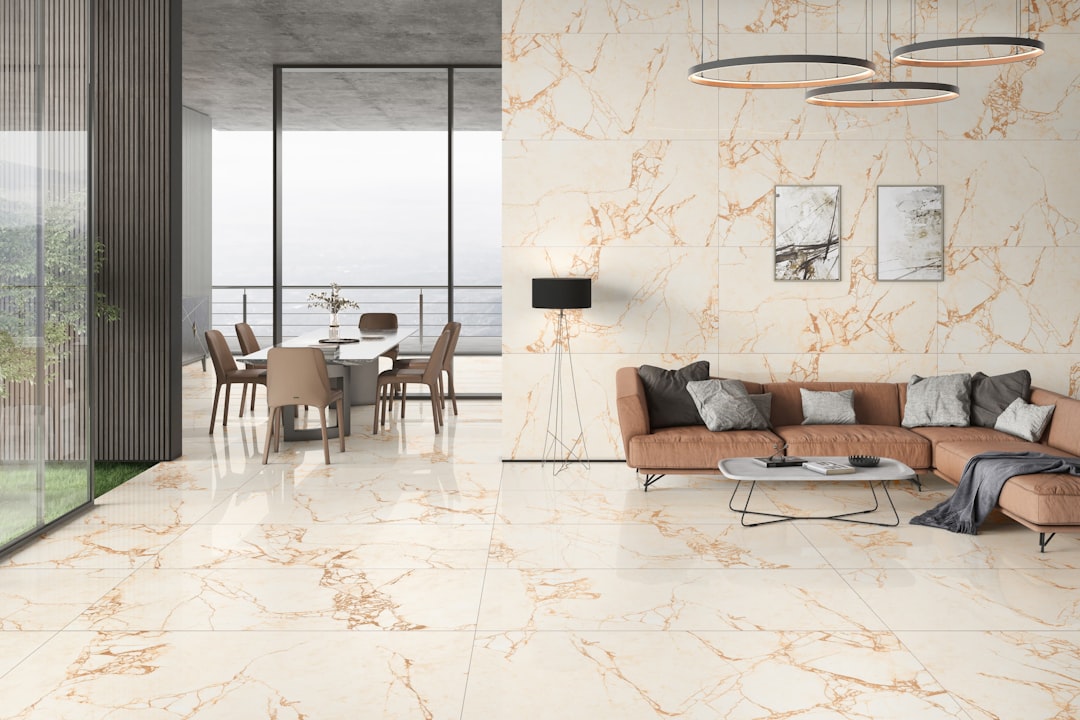
- Glazed vitrified tiles (GVT): Vitrified body with a glazed surface. The glaze allows photorealistic designs, wood effects, and marble looks. The most popular tile type in India currently.
- Double charge vitrified: Two layers of pigmented material pressed together — more colour variation than single-charge but less design flexibility than GVT.
- Polished vitrified: Full body or double charge tiles that are polished to a high gloss. Beautiful but slightly more slippery and harder to maintain (tiny polishing pores can absorb grime over time).
Which Is Better for Indian Homes?
For floors in Indian homes: vitrified tiles are the better choice in almost every case. The combination of heat, humidity, heavy foot traffic, and cleaning requirements (mopping multiple times daily in many Indian households) means you want the durability of vitrified.
For bathroom walls and kitchen walls: ceramic tiles are perfectly adequate and significantly cheaper. Walls aren't subject to the abrasion and impact that floors face, so the extra hardness of vitrified is largely wasted on vertical surfaces.
Pro Tip: For a cost-optimised approach — use GVT (glazed vitrified) tiles for all floors and high-traffic areas, and standard ceramic tiles for bathroom walls. This gives you durability where it matters and saves money where it doesn't. You'll cut 20–30% off your total tile budget without compromising on performance.
Cost Comparison in India
| Ceramic (600×600, per m²) | Vitrified GVT (600×600, per m²) | Premium Vitrified (per m²) |
|---|---|---|
| ₹250–₹600/m² | ₹450–₹1,200/m² | ₹1,200–₹3,000+/m² |
Standards for Tiles
| Standard | What It Covers |
|---|---|
| IS 15622 | Vitrified ceramic tiles |
For more on tile selection for specific rooms, our tile size guide covers which dimensions work best for different spaces. For a comparison of the most popular flooring options beyond tiles, see our guide on porcelain vs ceramic tiles.