

Choosing the wrong tile size for a room is one of the most common — and most visible — interior design mistakes. Too small and the room looks busy and dated. Too large and small rooms feel cramped. And beyond aesthetics, tile size affects how many cuts you'll need, how long installation takes, and how much you'll spend on grout and adhesive.
This guide gives you a clear, practical size recommendation for every room type — with reasoning behind each choice and costs across India.
General Rules for Tile Sizing
- Larger tiles make rooms look bigger — fewer grout lines mean a more open, seamless appearance
- Smaller tiles for curved and irregular surfaces — easier to fit around obstacles
- Room size vs tile size ratio matters — a 1200×1200mm tile in a 2m × 2m bathroom looks wrong; a 300×300mm tile in a large open-plan living area looks dated
- Floor tiles can go on walls, but wall tiles usually can't go on floors — floor tiles are thicker and slip-resistant; wall tiles are often too thin and slippery for floor use
Recommended Tile Sizes by Room
| Room | Recommended Floor Tile Size | Recommended Wall Tile Size | Notes |
|---|---|---|---|
| Living room / hall (large, 20m²+) | 800×800mm or 600×1200mm | N/A (usually no wall tiles) | Large format for open, modern look |
| Living room (medium, 12–20m²) | 600×600mm or 600×1200mm | N/A | 600×600 is the sweet spot for most living areas |
| Master bedroom | 600×600mm or 800×800mm | N/A | Avoid very large format — furniture makes cuts complex |
| Small bedroom | 400×400mm or 600×600mm | N/A | Larger tiles still work if room is rectangular |
| Master bathroom (8m²+) | 600×600mm or 600×1200mm | 300×600mm or 600×600mm | Large format works well in bigger bathrooms |
| Small bathroom / toilet (under 5m²) | 300×300mm or 400×400mm | 250×375mm or 300×600mm | Smaller floor tiles reduce awkward cuts around WC |
| Kitchen floor | 400×400mm or 600×600mm | 300×600mm (subway / metro) | Avoid very large format — too many cuts around cabinets |
| Kitchen backsplash | N/A | 75×300mm (subway) or 100×200mm | Subway tiles remain the most popular globally |
| Utility / laundry room | 300×300mm or 400×400mm | Optional | Smaller tiles more practical around fixtures |
| Outdoor / terrace | 600×600mm (min 12mm thick) | N/A | Must be slip-rated R11 or above for wet areas |
| Entrance / foyer | 600×600mm or 600×1200mm | N/A | Make a statement with large format or pattern tiles |
Popular Tile Sizes and What They're Best For
300×300mm
The classic small tile — versatile but increasingly considered dated for main living areas in contemporary design. Still excellent for bathrooms, utility areas, and anywhere with complex layouts. Easy to cut, minimal waste.
400×400mm
A good intermediate size. Works well in medium bathrooms, kitchens, and bedrooms. Less dated-looking than 300×300 but easier to handle than larger formats.
600×600mm
The current sweet spot for most rooms in India. Large enough to feel contemporary, small enough to handle without specialist equipment. Works in living rooms, bedrooms, bathrooms, and kitchens.
600×1200mm (Planks / Slabs)
Very popular currently for large living areas and master bathrooms. Creates a sleek, minimalist look. Requires a flatter floor substrate and more skill to lay correctly — uneven floors show through much more with large format tiles.
800×800mm and above
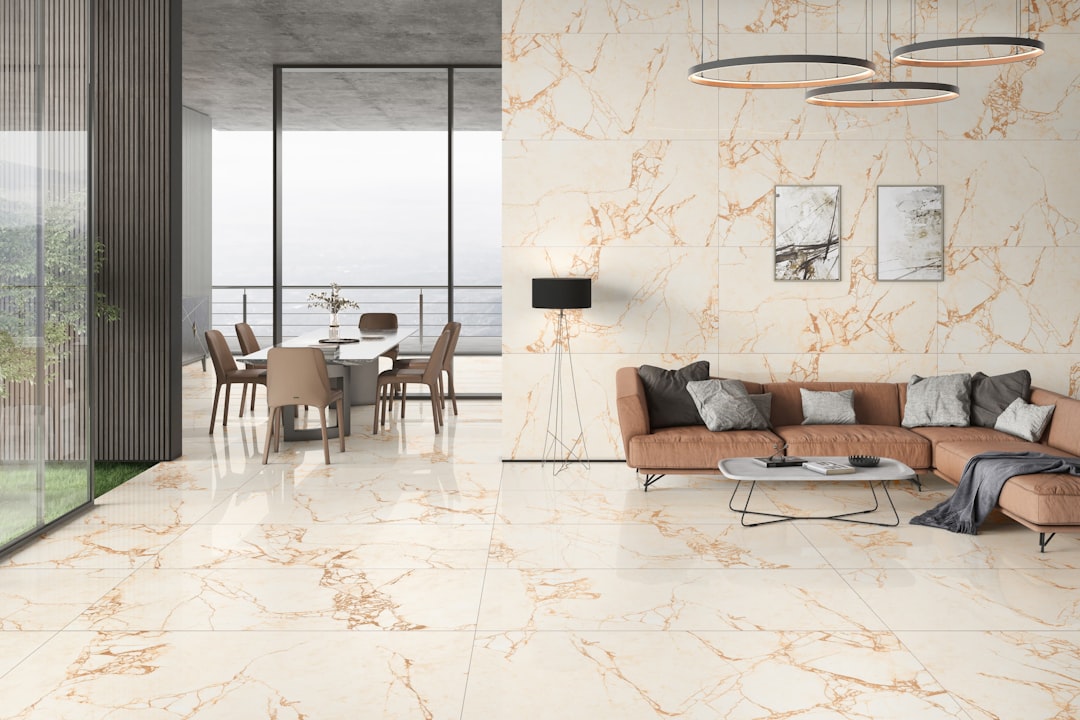
Premium large format — works beautifully in spacious, high-ceilinged rooms. Requires specialist installation equipment (suction cups, back-butterers) and an experienced tiler. Slate-look and marble-look large format tiles are very popular in UAE and Indian luxury developments.
Pro Tip: Before buying, lay a few tile samples on the floor of the room (without fixing them) and live with the look for a day. What looks good in a showroom under bright display lighting can look very different in your actual room with its specific natural light, wall colours, and furniture scale.
Grout Joint Width by Tile Size
| Tile Size | Recommended Grout Joint | Notes |
|---|---|---|
| Mosaic / 100×100mm | 2–3mm | Pre-mounted sheets make installation easier |
| 300×300mm | 3–5mm | Standard joint |
| 400–600mm | 2–3mm | Rectified (precision-cut) tiles allow narrower joints |
| 600×1200mm+ | 1.5–3mm | Requires rectified tiles and very flat substrate |
Tile Costs by Size and Country
| Tile Size | India (per sq ft) |
|---|---|
| 300×300mm | ₹30–₹80 |
| 600×600mm | ₹45–₹150 |
| 600×1200mm | ₹80–₹250 |
| 800×800mm | ₹100–₹300 |
For a detailed comparison of tile materials — porcelain vs ceramic, which is more durable, and which to use where — see our guide on porcelain vs ceramic tiles.