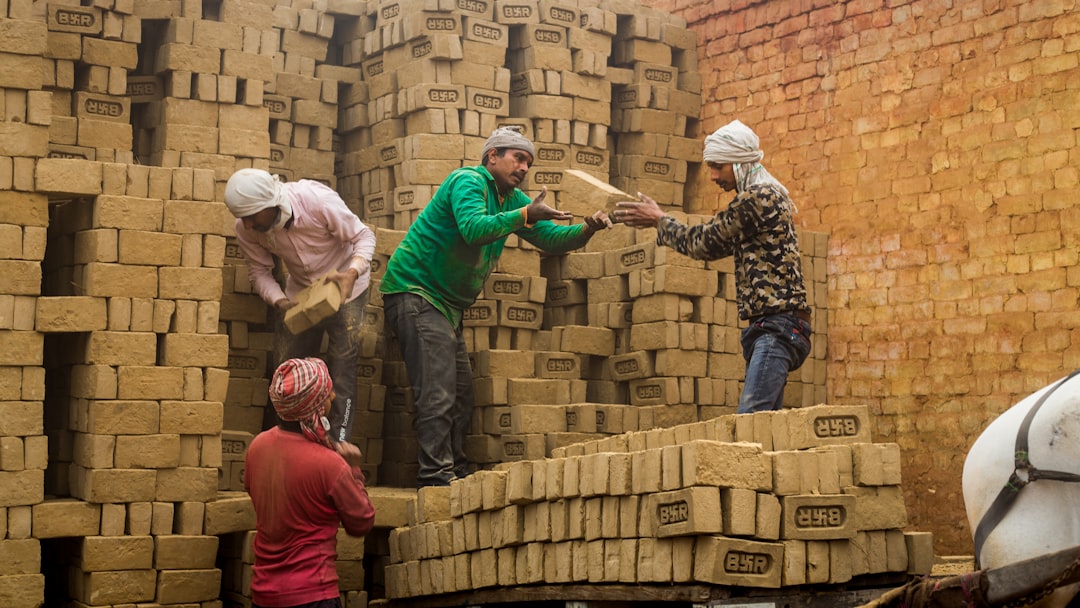

Brick or concrete block — it's one of the most common decisions in residential and commercial construction, and it's not as straightforward as most people assume. Both materials have genuine strengths and real weaknesses. The right choice depends on your climate, budget, what the wall needs to do, and where you're building.
This guide breaks down the comparison honestly — strength, cost, thermal performance, moisture resistance, and practical use cases — across India.
What Are Concrete Blocks?
Concrete blocks (also called CMUs — Concrete Masonry Units — in the USA, or concrete blocks in the UK and Australia) are rectangular blocks made from Portland cement, aggregate (gravel or sand), and water. They come in solid and hollow variants. Hollow blocks have cylindrical cores running through them, which reduce weight, improve thermal performance slightly, and allow reinforcement bars and grout to be placed inside for added structural strength.
In India, concrete blocks are sometimes called "concrete hollow blocks" or "solid concrete blocks." They're widely used for boundary walls, commercial buildings, and basement construction.
Strength Comparison
| Property | Clay Brick | Concrete Block (hollow) | Concrete Block (solid) |
|---|---|---|---|
| Compressive strength | 3.5–35 N/mm² | 3.5–7 N/mm² | 7–17.5 N/mm² |
| Tensile strength | Low | Low | Low |
| Water absorption | 5–15% | 8–12% | 6–10% |
| Fire resistance | Excellent | Excellent | Excellent |
| Density | 1,600–2,000 kg/m³ | 800–1,100 kg/m³ (hollow) | 1,800–2,200 kg/m³ |
High-grade engineering bricks (like Class B engineering bricks in the UK, or IS 1077 Class 100 in India) are significantly stronger than standard concrete blocks in pure compression. However, for most residential walls, both materials are more than adequate — the wall design and foundation matter far more than the unit strength.
Thermal Performance
This is where concrete blocks and bricks diverge significantly — and it matters a lot in climates with extreme heat or cold.
Clay brick has high thermal mass — it absorbs heat slowly during the day and releases it at night, helping moderate interior temperatures. This is why traditional brick homes in hot climates like India, the Middle East, and Mediterranean countries stay cooler inside without air conditioning.
Standard solid concrete blocks have similar thermal mass to brick. Hollow concrete blocks perform worse thermally because the air pockets, while reducing weight, don't have the same heat-storage properties as solid material.
In cold climates (UK, northern USA, Canada), neither standard brick nor concrete block alone provides adequate insulation. Both need insulated cavity construction or external insulation systems (EWI). For warm climates, the thermal mass of brick gives it an edge over hollow block.
Cost Comparison in India
| Clay Brick (per unit) | Concrete Block (per unit) | Labour (per m²) |
|---|---|---|
| ₹5–₹12 | ₹25–₹50 (hollow, 400×200×200mm) | ₹150–₹350/m² |
Per unit, bricks are cheaper than concrete blocks in most markets. But concrete blocks are much larger — a single 400×200×200mm hollow block covers the same wall area as roughly 6–8 standard bricks, and lays faster. So the cost comparison per square metre of wall is often closer than it appears per unit.
Speed of Construction
Concrete blocks lay faster. A skilled bricklayer can lay 300–500 standard bricks per day, or 100–150 large concrete blocks per day. Since one concrete block covers the area of 6–8 bricks, blocks win clearly on speed — which matters for labour cost on large projects.
This speed advantage makes concrete blocks popular for commercial construction, warehouses, boundary walls, and multi-storey buildings where finish appearance matters less than structural efficiency.
Which Is Better for What?
| Application | Better Choice | Why |
|---|---|---|
| Exposed exterior walls (residential) | Brick | Better appearance, thermal mass, moisture handling |
| Below-ground / basement walls | Concrete block | More resistant to ground pressure and moisture |
| Internal partition walls | Either (or AAC block) | Structural demands are minimal |
| Boundary / retaining walls | Concrete block | Cheaper, faster, can be reinforced with rebar |
| Commercial / industrial buildings | Concrete block | Speed, cost, can take large spans |
| Heritage / period style buildings | Brick | Aesthetic match, traditional character |
Pro Tip: In India, many builders use a hybrid approach — concrete hollow blocks for the internal leaf of cavity walls (cheaper, faster) and facing bricks for the outer leaf (better appearance and weathering). This gives you the best of both materials at an optimised overall cost.
Standards in India
| Brick Standard | Concrete Block Standard |
|---|---|
| IS 1077 (clay brick) | IS 2185 (concrete blocks) |
For a broader look at brick types and which works best in different construction scenarios, see our guide on what is brick and mortar — it covers material properties in depth. If you're specifically comparing brick vs AAC blocks (a popular lightweight alternative), our AAC blocks vs bricks comparison is worth reading.